For Research and Laboratory Use Only
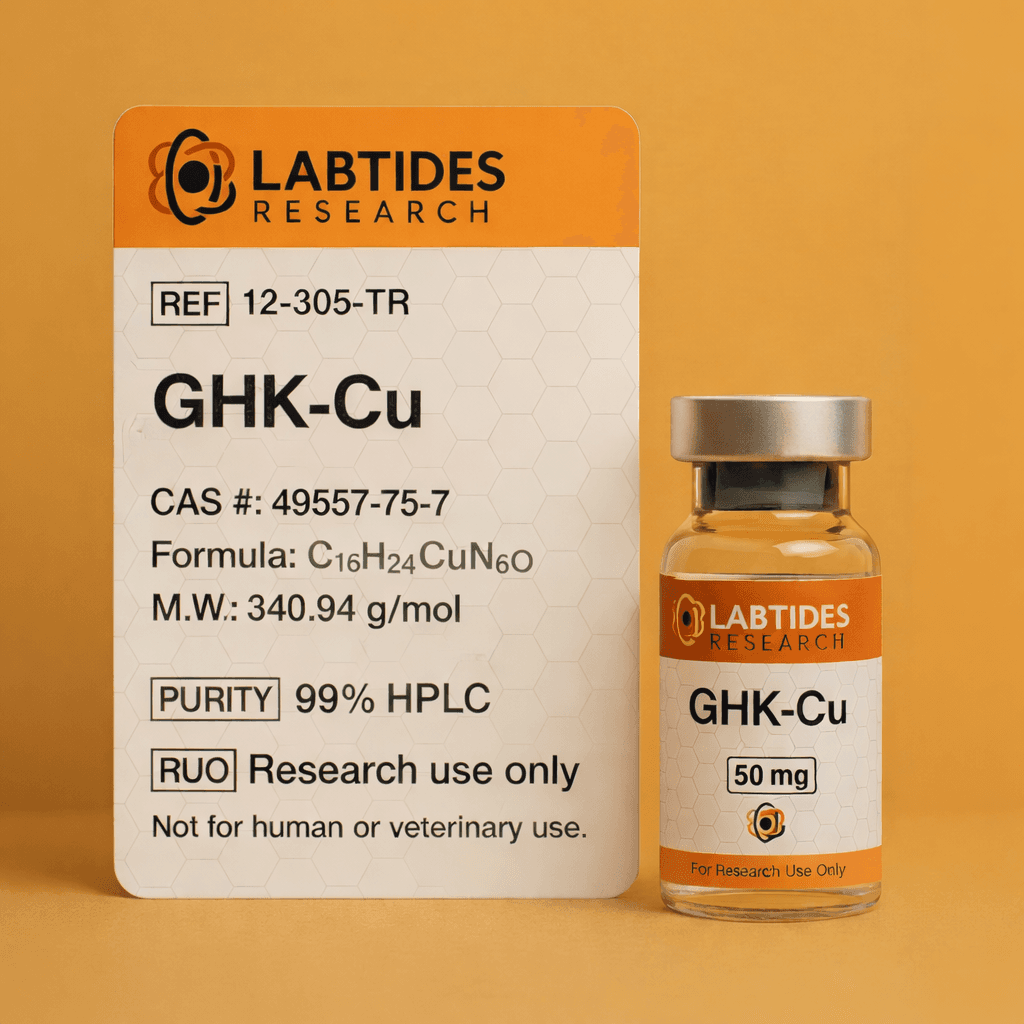
GHK-Cu (Copper Peptide) is a naturally occurring tripeptide with copper binding properties. Research applications include studies on skin biology and wound healing processes. 99% HPLC verified purity. CAS #: 49557-75-7.
$55.00
$44.99
HPLC tested >99%
Mon, Jun 8 – Wed, Jun 10
For research and laboratory use only. Not for human consumption, therapeutic, or diagnostic use. Must be 21+ to purchase.
COLLAGEN INCREASE
vs 50% vitamin C, 40% retinoic acid
GENES MODULATED
4,000+ human genes affected
HAIR GROWTH
Follicle size increase
VISIBLE RESULTS
Clinical facial study duration
MECHANISM OF ACTION
GHK-Cu is a naturally occurring tripeptide that binds with copper to create a powerful regenerative complex. Released from damaged collagen as an injury signal, it orchestrates healing by modulating thousands of genes.
Epigenetic Modulation
Collagen & ECM Synthesis
From clinical studies and research protocols
Most commonly studied delivery method in clinical trials
2-4%
Concentration in cream/serum formulation
Duration
Typical study duration for visible results
·Applied to clean, dry skin
·Results typically visible after 4-6 weeks
·No significant irritation reported at these concentrations
PHARMACOKINETICS
Rapidly binds to tissue proteins after administration
Effects persist beyond plasma clearance due to gene modulation
SAFETY PROFILE
FAQ
GHK-Cu is a naturally occurring tripeptide (glycyl-L-histidyl-L-lysine) that binds with copper. Discovered in human plasma in 1973, it declines from ~200 ng/mL at age 20 to ~80 ng/mL at age 60.
·GHK-Cu is a naturally occurring peptide that declines with age
·Multiple delivery routes studied with consistent safety profiles
·Topical application most common in cosmetic research
·Injectable forms used primarily in research settings
Copper Ion Transport
GHK-Cu affects more human genes than any other studied peptide — modulating 31.2% of the human genome.
Genes Upregulated
1,942
Genes Downregulated
762
DNA Repair Genes
↑ 47 genes
Antioxidant Genes
↑ 14 genes
CLINICAL / RESEARCH RESULTS
71 women with mild to advanced photoaging applied GHK-Cu facial cream twice daily for 12 weeks. Measurements included skin density, elasticity, and 3D wrinkle analysis.
70%
Improved collagen
vs 50% vitamin C
55.8%
Wrinkle volume reduction
vs control serum
35.5%
Wrinkle depth decrease
12-week measurement
RESEARCH APPLICATIONS
30-50% follicle size increase in controlled studies. Improved growth rate and anagen phase extension.
Source: Hair Growth Studies
Multiple pathways contribute to enhanced healing. Diabetic ulcer patients showed significantly improved healing.
Source: Mulder et al. 1994
Acts as a master regulator of cellular health. Shifts gene expression from tissue destruction to repair.
Source: Gene Expression Analysis
Multiple mechanisms combat oxidative stress. SOD activity increased, lipid peroxidation reduced 38%.
Source: Antioxidant Studies
Used in preclinical and specialized research studies
1-2mg
Research dosing range
Duration
Typical research protocol duration
·Subcutaneous injection most common
·Half-life approximately 30-60 minutes
·Rapid tissue distribution observed
Copper binding enhances stability and activity
·No serious adverse events reported in any published clinical trial
·Safety profile comparable to standard cosmetic ingredients
·Long history of safe use in cosmetic formulations since 1980s
COMPOUND INFORMATION
Lyophilized (powder)
Reconstituted
Working solution